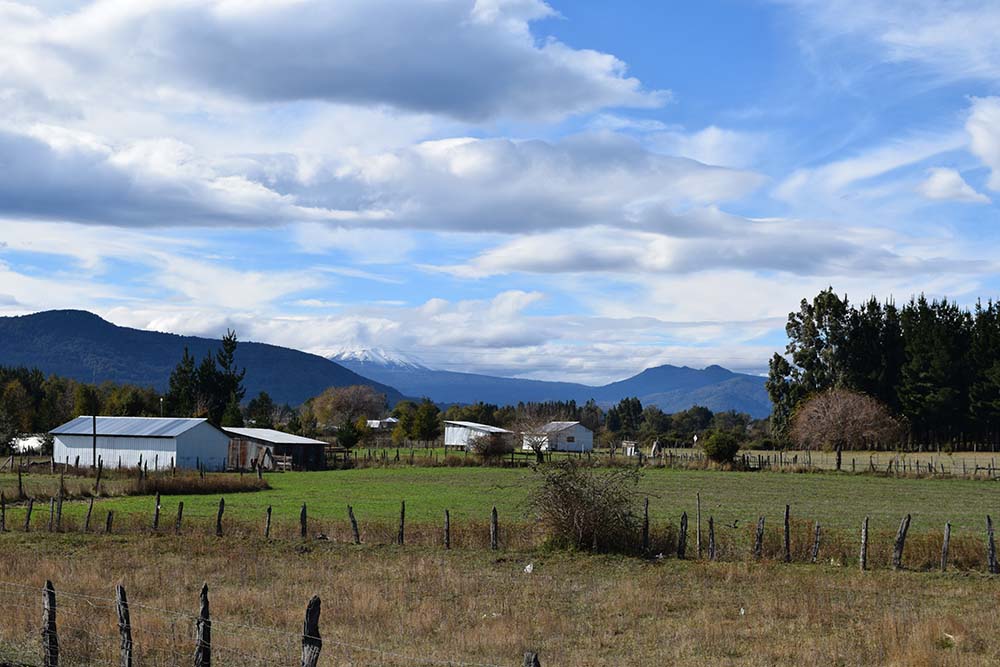
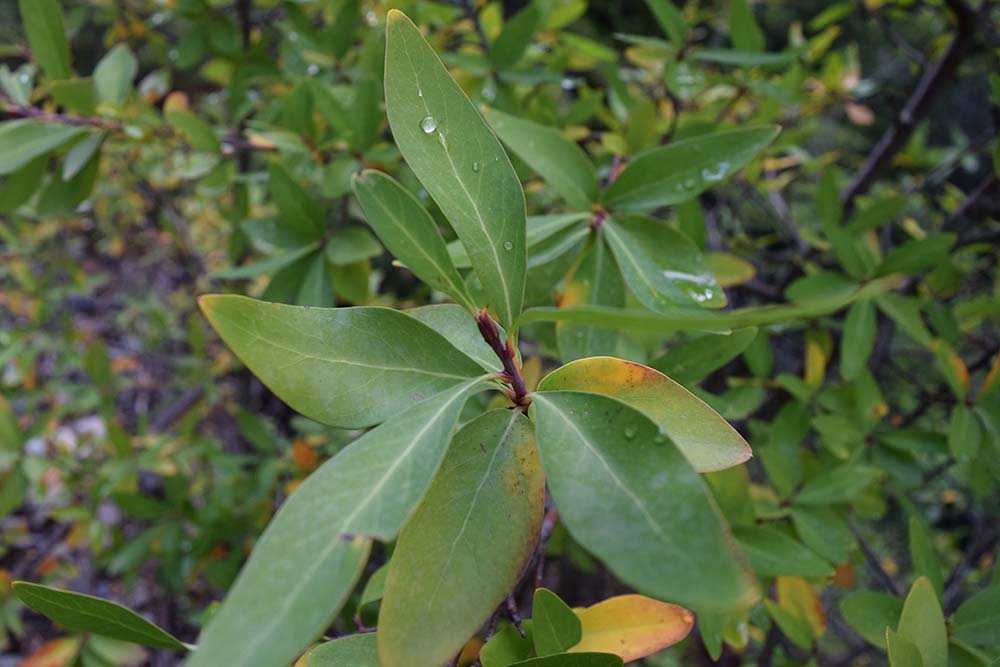
The Mapuche people are concentrated in the south-central regions of Argentina and Chile, locus of their ancestral territories. According to the latest Chilean census, 1,508,722 Chileans are Mapuche, which corresponds to roughly 9 percent of the national population (DiGiminiani 2013). More than half of the Mapuche population (59.1%) live in Regions that correspond to their land of traditional occupation (e.g. Araucania, Bío-Bío, Los Lagos, and Los Rios Regions), reflecting the inextricable link between Mapuche people and the land (CEPAL 2012).
In the Araucania Region, the Mapuche people represent almost a quarter of the regional population (23.5%). According to Du Monceau (2008), this region has experienced significant land-use changes over the past few decades. In particular, the native forests in this area have been subject to selective logging, forest fires, and the introduction of plantations (See map bellow).

As Du Monceau (2008) states, this region’s native forests are disappearing and being degraded at an alarming rate. In parallel, ITPs are expanding dramatically provoking severe environmental impacts (e.g. droughts, forest fires, floods, soil erosion, etc.). Being subject to these impacts, as well as many others, some Mapuche communities of the Araucania Region have become emblematic communities (e.g. Temucuicui, Mapuche Community located in the Ercilla Municipality, Province of Malleco, See map bellow), not only because of its struggle for land access, but also because of the brutal repression from the Chilean state (CEPAL 2012). In the following map, it is possible to see how plantations have been established even within the Mapuche Títulos de Merced, an area that represents about 965 ha.

The municipality of Ercilla is a particular case, because almost half of its area is covered with ITPs (40%). The expansion of the forest industry in this municipality is the result of a complex situation, involving economic incentives offered by the State and false labor expectations, and the promotion by forest companies of new income sources and improvements to the local infrastructure as a means to counteract the impoverishment of Mapuche communities (CEPAL 2012).
Cited work
CEPAL, 2012. Desigualdades territoriales y exclusión social del pueblo mapuche en Chile: Situación en la comuna de Ercilla, Santiago, Chile.
DiGiminiani, P., 2013. The contested rewe: sacred sites , misunderstandings, and ontological pluralism in Mapuche land negotiations. Journal of the Royal Anthropological Institute, 19, pp.527–544.
DuMonceau, M.I., 2008. The political ecology of indigenous movements and tree plantations in chile. The University of British Columbia.
Alianza Territorial Mapuche (ATM)

The Mapuche Territorial Alliance (ATM) is one of the grassroots organizations based on the ancestral territory of the Mapuche Nation in the south of Chile – the Gulu Mapu, or west side of the Andes. The ATM’s core mission is the full defence of Mapuche inherent rights, especially concerning the protection of the territory and the natural environment.
The collaboration with the ATM was of great help when identifying Mapuche communities experiencing different levels of conflict over access to land, and at the same time suffering from the impacts of climate change (e.g. water scarcity), and key actors in the field. Moreover, their network was of great value in establishing the first contact with the communities’ members to create rapport and build trust. This was particularly true in areas where outsiders are not welcome.
The main contacts were Mr. Miguel Melin and Mr. Alberto Curamil. Miguel is a Mapuche intercultural bilingual educator, activist, and former spokesperson for the ATM. He has extensive experience as a Mapuchezungun-Spanish teacher and has led several participatory projects with youth to revitalize the Mapuche language. He is also one of the intercultural researchers at the Indigenous Studies Institute so I could discuss my research on different occasions with him. Alberto is the spokesperson for the ATM, a community leader and traditional authority of the Curacautín area, Mapuche territory. He currently leads the opposition to the installation of hydroelectric power stations on several rivers across his traditional territory.
Hopefully, from this collaboration, the main product will be a document explaining in lay terms the results of this research. This document will be distributed among the research collaborators, in the different communities where interviews took place.
Instituto de Estudios Indígenas e Interculturales (IEII)

During the fieldwork associated with this research, I was a visiting scholar at the Indigenous Studies Institute – Instituto de Estudios Indígenas, which is a research unit at the University of La Frontera, in Chile. As part of this position, I had access to the archives of the Indigenous Documentation Centre – Centro de Documentación Indígena (CDI) – hosted by the Institute. This documentation centre has more than 10,000 bibliographic registries, comprising one of the largest indigenous archives in Chile. This was of great value to this research, as I am examining the historical evolution of the land tenure in the region, as well as the origins of the land conflict in the Mapuche territories. I also was assigned a space in the Institute where I was able to work during the days I was not in the field. This also presented me the opportunity to meet other researchers working in the Institute with whom I had very interesting and useful conversations.
By the end of this research project, producing a policy paper in collaboration with the Institute will be one of the outcomes of this collaboration. This paper will transfer knowledge gained through this research to policy decision-makers, especially those working on the extension of Decree 701, and the evaluation of Indigenous Law 19,253. In addition, the Institute develops outreach activities such as seminars and training on topics of institutional interest, which will provide additional opportunities to disseminate the outputs of this research to the Institute audience.
The contact for this collaboration was the director of the Institute, Natalia Caniguan Velarde, and she can be contacted at natalia.caniguan [at] ufrontera.cl
Getting back to collaborators, a vital part of collaborative research. Not only to comply with the proposed research approach and to get feedback on the work that has been done but also as an act of reciprocity and respect towards research collaborators. Allowing them a safe space to freely discuss, comment and raise their voices, if they want to.
On May 3rd I went back to the Indigenous and Intercultural Studies Institute (IIEI) at the University of La Frontera, Chile. The Institute not only hosted me for three months during 2016 while I was doing fieldwork in the Araucania Region but also it has been a very important collaborator during the whole research process.
The objective of this visit was to present and discuss the results of the research with a broad audience. In doing so, I was also lucky to have an interdisciplinary panel to comment on my presentation. The panel was formed by Ximena Cuadra, Ph.D. Candidate in Political Science, University du Québec a Montréal, Alberto Kuramil, Longko of Lof Radalko in Curacautin, and Gonzalo Bustamante, Adjoint Professor at Univerity of La Frontera.
I recorded the presentation, the panel discussion and the QA section, and edited this video (all in Spanish):
This is the press note the IIEI released about the presentation (in Spanish):
http://estudiosindigenas.ufro.cl/index.php/noticias/33-estudio-analiza-vinculacion-de-la-espiritualidad-mapuche-con-el-cambio-climatico
Peer-reviewed
Arias-Bustamante J.R. and Innes J.L. (2021) Mapuche Spirituality and Its Contribution to Climate Change Mitigation. In: Leal Filho W., Luetz J., Ayal D. (eds) Handbook of Climate Change Management. Springer, Cham. https://doi.org/10.1007/978-3-030-22759-3_119-1
Non-peer-reviewed
Arias-Bustamante, J. 2019. The Criminalization of Mapuche Land Defenders in Chile. Impakter: https://impakter.com/the-criminalization-of-mapuche-land-defenders-in-chile/

Partial funding for this research was also received from The UBC Graduate & Postdoctoral Studies, through its Public Scholars Award. This award is part of the UBC Public Scholars Initiative (PSI) which intends to build connections, community, and capacity for doctoral students who are interested in explicitly linking their doctoral work to an arena of public benefit and integrating broader and more career-relevant forms of scholarship into their doctoral education process. In this link, you can visit the author’s profile and find more information about the project. The total contribution of this grant was CAD$ 11,500

Funding to carry out this research was secured through Rufford Small Grants for Nature Conservation. This grant is made possible by The Rufford Foundation, which seeks to fund people whose work makes a pragmatic, substantial and long-lasting contribution to nature conservation. Thus, not only recognizing the relevance of the research but also acknowledging personal contributions to nature conservation. In this link, you can access the description of the project. The total contribution of this grant was approx. CAD$10,000.
It is appreciated the tremendous contribution The Foundation is doing towards nature conservation globally, and for making this kind of research possible. Otherwise, it could have been impossible, as funding opportunities are getting more and more scarce, especially for young researchers.

Partial funding for this research was also received from The Liu Institute for Global Issues, through its Bottom Billion fieldwork award. This award supports dissertation research on economically poor and marginalized peoples in developing countries. The total contribution of this grant was approx. CAD$ 1,300.